PICU
Overview
The Pediatric Intensive Care Unit (PICU) of The Children's Hospital, Zhejiang University School of Medicine is one of the largest, advanced professional pediatric critical care unit in China. Established as an independent department in 2006 following its separation from the NICU, it now serves as the hospital's core center for critically ill children. In 2011, was included in first batch of the National Key Clinical Specialty (Pediatric Critical Care). The unit is also a training base of the Chinese Medical Doctor Association's Committee on Extracorporeal Life Support.
The unit operates 22 open beds and is staffed by an experienced multidisciplinary team comprising over 30 specialized physicians and more than 40 nurses including 2 Chief Physicians, 5 Associate Chief Physicians, 2 Associate Chief Nurses, 17 Nurse-in-Charge, and 1 postgraduate supervisor. Annually, it receives over 1,000 critically ill children, maintaining a resuscitation success rate above 95%.
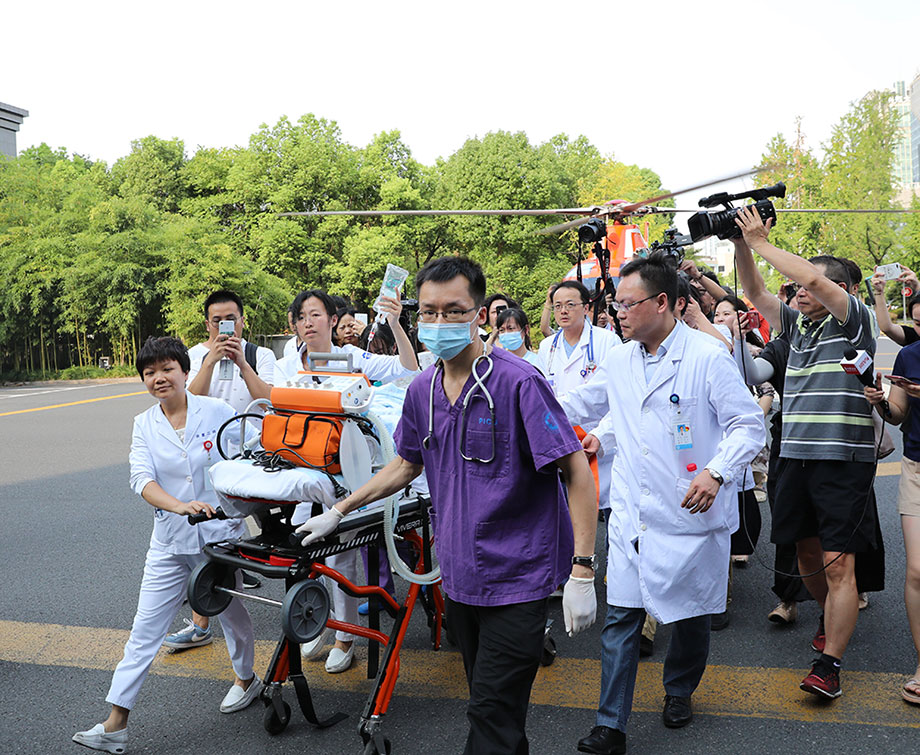
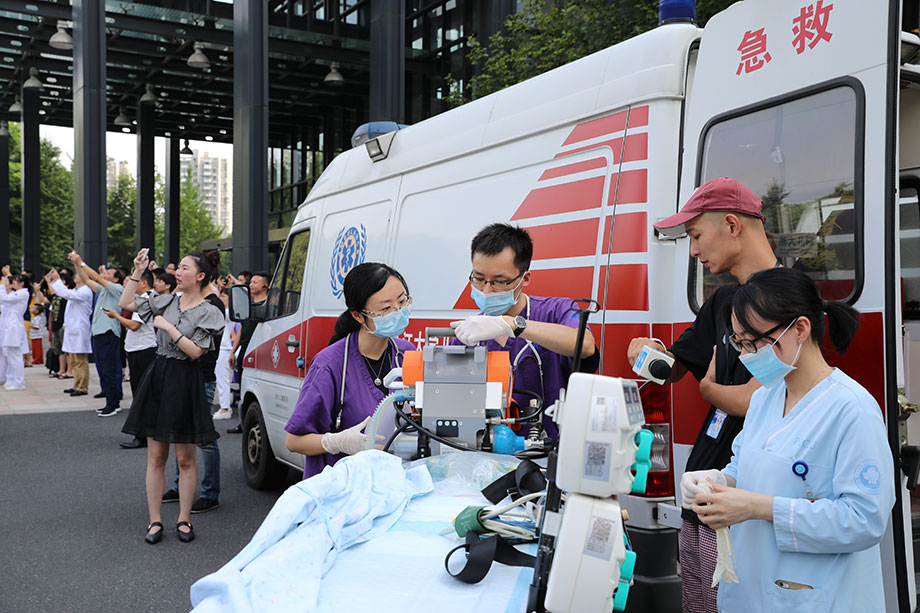
The center is equipped with a comprehensive array of internationally advanced medical devices, including a central vital signs monitoring system, Extracorporeal Membrane Oxygenation (ECMO) machines, conventional and high-frequency ventilators, continuous blood purification equipment, hemoperfusion devices, flexible fiberoptic bronchoscopes, non-invasive cardiac output monitors (NICOM), Pulse index Contour Continuous Cardiac Output (PiCCO) monitors, bedside ultrasound,near-infrared spectroscopy cerebral oximeters, cerebral function monitors, and cerebral electrical impedance tomography device.Routine procedures and capabilities include cardiopulmonary cerebral resuscitation and post-resuscitation integrated management, multimodal cerebral function and hemodynamic monitoring, bedside critical care ultrasound, bedside fiberoptic bronchoscopy diagnosis and treatment, bedside tracheostomy, temporary cardiac pacing, and brain death determination.It is at the domestic leading level in treating cardiopulmonary cerebral arrest, various types of shock, sepsis, severe pneumonia, Acute Respiratory Distress Syndrome (ARDS), acute multiple organ failure (respiratory, cardiac, hepatic, renal), severe pancreatitis, anaphylaxis, severe complications from CAR-T therapy, and acute poisoning. Its success rate in treating fulminant myocarditis with ECMO technology is World-leading.As one of China's earliest units to adopt continuous blood purification techniques, it performs various modalities including Continuous Renal Replacement Therapy (CRRT), double filtration plasmapheresis, hemoperfusion, and immunoadsorption. It has successfully combined these techniques with ECMO to treat severe ARDS and refractory septic shock.As a member unit of the Critical Care Group of the Pediatric Society of the Chinese Medical Association, the center is committed to training pediatric intensive care professionals nationwide. It maintains academic exchanges with institutions such as Loma Linda University Medical Center in the US and others globally. The center regularly conducts Pediatric Fundamental Critical Care Support (PFCCS) training courses, national continuing medical education programs, and specialized pediatric critical care nursing training programs, contributing significantly to the national pool of pediatric emergency and critical care medical personnel.In 2014, the unit was honored with the title of "National Youth Civilization Unit." Over the years, in response to public health emergencies such as SARS, influenza, COVID-19, severe Hand, Foot and Mouth Disease (HFMD) disease, adenovirus, and mycoplasma infections, the center has not only guided the treatment of critically ill pediatric infection cases within Zhejiang Province but has also been directly involved in major public incident medical rescues. Notable cases include the successful resuscitation in 2011 of a child ("Niuniu") who fell from the tenth floor, which touched the nation; the successful treatment in 2014 of two severely burned children from the "July 5th Hangzhou Bus Arson Attack"; and the successful rescue in 2019 of three children with severe airway burns and asphyxiation from the "August 27th Yongtaiwen Expressway Traffic Accident."Since 2017, the center has provided a 24/7 critical care pediatric transport service, transferring over 100 children annually from provinces and municipalities including Shanghai, Jiangsu Province, Jiangxi Province, Anhui Province, and Fujian. Province.In 2018, it launched air transport services and high-level organ support transport assisted by ECMO, maintaining a 100% successful transport rate to date.

The center provides a comprehensive array of advanced diagnostic, monitoring, and life support technologies.
1) Advanced Diagnostic & Monitoring Techniques
Bedside Flexible Bronchoscopy
Bedside Critical Care Ultrasound
Pulse index Contour Continuous Cardiac Output (PiCCO) Monitoring
Non-Invasive Cardiac Output Monitoring (NICOM)
Multimodal Neuromonitoring including:
Near-Infrared Spectroscopy (NIRS) Cerebral Oximetry
Electroencephalography (EEG)
Electrical Impedance Tomography (EIT)
Invasive Arterial Blood Pressure Monitoring
Pulmonary Electrical Impedance Tomography Monitoring
Brain Death Determination
2) Advanced Organ Support & Therapeutic Techniques
Extracorporeal Membrane Oxygenation (ECMO)
Continuous Blood Purification (CBP) / Continuous Renal Replacement Therapy (CRRT)
Therapeutic Plasma Exchange, including Double Filtration Plasmapheresis (DFPP)
Hemoperfusion
Immunoadsorption
Peritoneal Dialysis
Bronchoalveolar Lavage
Tracheostomy
Temporary Cardiac Pacing
Metabolism and Nutritional Support for Critically ill Patients
Targeted Temperature Management (TTM)
Bone Marrow Aspiration
Lumbar Puncture
Thoracentesis
Closed Thoracic Drainage
Abdominal Paracentesis
Central Venous Catheterization
Peripherally Inserted Central Catheter (PICC) Placement
3) Scope of Clinical Expertise & Treated Conditions
The center possesses extensive experience in managing a wide spectrum of critical pediatric illnesses, including but not limited to:
Severe Pneumonia (including Ventilator-Associated Pneumonia)
Various Forms of Shock (notably Septic Shock and Anaphylactic Shock)
Acute Respiratory Distress Syndrome (ARDS)
Fulminant Myocarditis
Status Asthmaticus
Multiple Organ Failure (e.g., Respiratory, Cardiac, Hepatic, Acute Kidney Injury)
Critical Congenital Heart Disease with Heart Failure
Severe Cardiac Arrhythmias
Severe Hepatitis with Hepatic Failure
Severe Pancreatitis
Severe Encephalitis and Brainstem Lesions
Reye Syndrome
Severe Guillain-Barré Syndrome
Crises of Various Inborn Errors of Metabolism
Severe Complications from CAR-T Cell Therapy
Hemophilia
Severe Hand, Foot and Mouth Disease (HFMD)
Various Critical Injuries (Trauma, Drowning, Poisoning, Electric Shock)
Severe Electrolyte Imbalances and other critical conditions.

Professional Features
In recent years, the center has further improved treatment outcomes and reduced disability rates by integrating multiple advanced technologies into the management of sepsis, including mechanical ventilation, blood purification, extracorporeal membrane oxygenation (ECMO), bedside flexible bronchoscopy, bedside ultrasound, hemodynamic monitoring, multimodal brain function monitoring, and critical care rehabilitation techniques.The center is one of the children's specialty hospitals in China with the highest case volume of ECMO for treating fulminant myocarditis, achieving a survival rate of 90%, which is at the internationally advanced level. ECMO technology has also been successfully applied in rescuing children with severe acute respiratory distress syndrome (ARDS) and refractory septic shock.In 2022, the center obtained the qualification for brain death determination. It has since been managing critically ill children who are potential organ donors following brain death and has initiated brain injury assessment and brain death determination procedures under ECMO support, thereby facilitating the hospital's organ transplantation program.Building upon traditional blood purification techniques, the center has implemented "hybrid" blood purification modalities, such as double filtration plasmapheresis, offering novel therapeutic approaches for immune-related neurological disorders and metabolic diseases like familial hyperlipidemia.Regarding severe complications—such as cytokine release syndrome (CRS) and immune effector cell-associated neurotoxicity syndrome (ICANS)—that may arise during the administration of novel CAR-T therapy for autoimmune diseases (e.g., SLE), the center employs comprehensive salvage treatment strategies with favorable results, providing crucial support for the safe implementation of this new therapy.Since initiating its critical care transport service in 2017 and launching helicopter air transport and ECMO-assisted high-level organ support transport in 2018, the center has completed over 400 critical pediatric transports from 2022 to 2025. This includes 6 ECMO-assisted transports, with the annual transport volume steadily increasing. Interprovincial transports have covered four provinces and one municipality: Shanghai, Jiangsu, Anhui, Jiangxi, and Fujian. The center maintains a dedicated, 24/7/365 specialized transport team composed of senior attending physicians and has established a robust pre-transport assessment system.

The center focuses its scientific research on multiple critical clinical issues in pediatric intensive care, including precision treatment of sepsis, rapid detection of pathogens in severe respiratory infections, comprehensive diagnosis and management of severe hand, foot and mouth disease (HFMD), ECMO rescue techniques, and clinical challenges in blood purification technologies.The center serves as a Principal Investigator (PI) unit for one of the National Key Research and Development Programs under the Ministry of Science and Technology's 14th Five-Year Plan. It has led or participated as a key member in 4 projects funded by the National Natural Science Foundation of China, leads 1 Key research project from Zhejiang Provincial Department of Science and Technology, 2 projects from Zhejiang Provincial Natural Science Foundation, and over 10 research projects from Zhejiang Provincial Health Commission.In recent years, the center has contributed to the development of 1 international guideline and 7 domestic guidelines. Its staff have authored chapters for more than ten medical books(including a undergraduate textbook authorized by the National Health Commission). The center has published over 20 SCI-indexed articles and more than 60 Chinese articles, with the highest single-article impact factor exceeding 7 and a cumulative total impact factor of over 50.

Expert Team
| No. | Name | Academic Rank |
|---|---|---|
|
1 |
Chief Physician |
|
|
2 |
Chief Physician |
|
|
3 |
Associate Chief Physician |
|
|
4 |
Associate Chief Physician |
|
|
5 |
Associate Chief Physician |
|
|
6 |
Associate Chief Physician |
|
|
7 |
Associate Chief Physician |