
Thoracic Surgery Department
Overview
The Department of Thoracic Surgery at Children's Hospital, Zhejiang University School of Medicine was established in 1981. After over three decades of development, it has grown into a key medical discipline in Zhejiang Province and serves as the Deputy Chair Unit of the Cardiothoracic Surgery Group under the Pediatric Surgery Branch of the Chinese Medical Association. The department boasts an expert team with international perspectives. Nearly half of its members hold doctoral degrees, and all possess master's degrees or higher. Key surgeons have received advanced training at internationally renowned cardiothoracic surgery centers in the United States, Germany, Canada, and other countries, accumulating extensive clinical experience.
To focus more specifically on the diagnosis and treatment of pediatric thoracic diseases, the department officially became an independent unit in December 2014. As one of the few specialized departments in China dedicated to pediatric thoracic surgery, we are not only a member of the Chest Wall International Group but also one of the earliest institutions in China to perform da Vinci robotic surgeries. It has been designated as a da Vinci Surgical Robot Clinical Surgery Teaching and Demonstration Center for Pediatric Thoracic Surgery in China, holding a leading position in the field of pediatric thoracic surgery domestically.
The department currently has 2 chief physicians, 1 associate chief physicians, and 4 attending physicians, with 25 open beds. The nursing team is highly skilled, emphasizing meticulous perioperative care that combines professionalism with humanistic care, fully committed to ensuring the physical and psychological recovery of young patients.

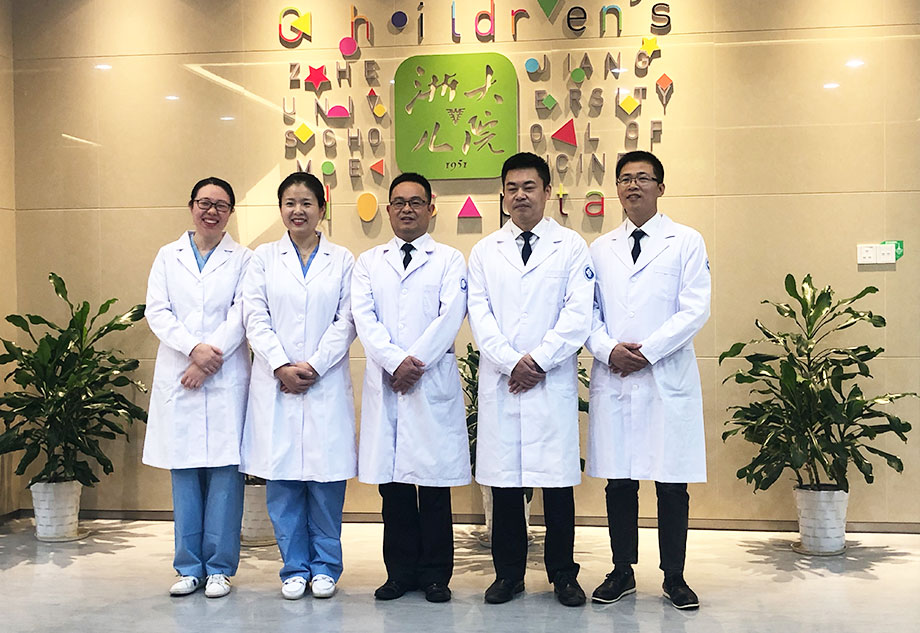
Since successfully performing the first cases of hiatal hernia repair and lobectomy in 1981, the department has continuously improved both the volume and quality of surgeries. The main conditions currently diagnosed and treated include:
Chest Wall Deformities: Pectus excavatum, pectus carinatum, bifid rib, etc.
Congenital Lung Diseases: congenital pulmonary airway malformation (CPAM), pulmonary sequestration(PS), bronchial atresia, congenital lobar emphysema, pulmonary cyst, tracheal cyst, pulmonary bulla, etc.
Thoracic and Mediastinal Tumors: Neurogenic tumors, teratoma, mediastinal cysts, lymphangioma, pleuropulmonary blastoma, chest wall tumors, etc.
Diaphragmatic Diseases: Posterolateral diaphragmatic hernia, hiatal hernia, retrosternal hernia, diaphragmatic eventration, etc.
Esophageal Diseases: Esophageal atresia, esophageal stenosis, tracheoesophageal fistula, gastroesophageal reflux disease (GERD), etc.
Others: Hydropneumothorax, empyema, chylothorax, etc.
The department performs over 800 surgeries annually with a success rate as high as 99.8%.

Professional Features
The department began performing pediatric thoracoscopic surgeries in 2004 and has continuously advanced its minimally invasive techniques. Since becoming an independent unit, the proportion of thoracoscopic and robotic surgeries has exceeded 85% of the total surgical volume, leading the domestic pediatric thoracic surgery field into the era of minimally invasive surgery.
Chest Wall Deformity Correction: A pioneer in China in employing 3D optical scanning for dynamic assessment of chest wall deformities and non-invasive vacuum bell therapy for pectus excavatum, establishing a non-invasive diagnosis and treatment system. The application of personalized NUSS bar placement for complex chest wall deformities represents leading technology.
Thoracoscopic and Robotic Surgery: Comprehensive performance of thoracoscopic and da Vinci robotic surgeries, including lobectomy/segmentectomy/precise pulmonary lesion resection, mediastinal tumor resection, diaphragmatic hernia repair, hiatal hernia repair, radical correction of esophageal atresia, etc. Since introducing the da Vinci robotic system in 2020, the department has completed nearly 900 robotic surgeries, demonstrating excellence in managing complex pulmonary malformations and mediastinal tumors.
Enhanced Recovery After Surgery (ERAS): Active implementation of the ERAS concept in pediatric thoracic surgery. Advanced techniques such as Tubeless surgery, three-dimensional computed tomography bronchography and angiography (3D-CTBA) guided precise segmentectomy, and indocyanine green (ICG) fluorescence imaging are utilized to improve treatment outcomes and reduce patient discomfort.

While undertaking heavy clinical responsibilities, the department places high importance on research and education. As a teaching base of Zhejiang University, it is responsible for training undergraduates, postgraduate students, and visiting physicians. The department has published over 150 academic papers, including 15 indexed in SCI and more than 50 in authoritative Chinese journals such as the Chinese Journal of Surgery and the Chinese Journal of Pediatric Surgery. It has led 3 projects funded by the National Natural Science Foundation of China and over 20 provincial/ministerial-level research projects, with total research funding exceeding 10 million RMB.
We always remain patient-centered, pursuing technological innovation and service optimization, and are committed to providing the highest level of diagnosis and treatment for pediatric thoracic diseases nationwide.

Expert Team
| No. | Name | Academic Rank |
|---|---|---|
|
1 |
Chief Physician |
|
|
2 |
Associate Chief Physician |