
Reflections on My Fellowship at Boston Children's Hospital
From October 3 to December 14, 2025, I completed a clinical fellowship in pediatric urology at Boston Children's Hospital. This ten-week experience significantly enhanced my clinical expertise while fundamentally reshaping my understanding of comprehensive pediatric care delivery.
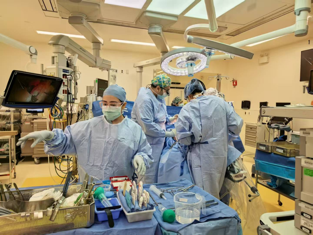
Under the guidance of Dr. Estrada and the Department of Urology, I participated in rotations across outpatient clinics, inpatient units, and surgical centers. The exposure to da Vinci robotic-assisted minimally invasive procedures was particularly valuable. These techniques demonstrated superior precision and reduced invasiveness compared to conventional approaches. Our hospital has also carried out a full range of robotic surgical procedures, thus achieving alignment with cutting-edge international practices in pediatric urology.
The complex genital reconstruction surgeries revealed an approach that extended beyond functional restoration. The surgical team carefully balanced technical outcomes with aesthetic considerations, recognizing the profound impact of appearance on pediatric patients' psychological development and social integration. This holistic perspective on surgical planning challenged me to consider outcomes beyond immediate medical metrics.
The neurogenic bladder management program exemplified longitudinal care at its finest. Rather than episodic interventions, the program maintained systematic follow-up protocols that evolved with patients' developmental stages. This model of sustained engagement with patients and families demonstrated a commitment to long-term outcomes that I found exemplary.
While Boston Children's Hospital possesses exceptional technological resources, its distinguishing feature lies in its institutional culture. The hospital's mission encompasses four core elements: delivering high-quality healthcare, advancing research and discovery, educating future healthcare leaders, and improving community health. These principles are actively integrated into daily operations rather than merely stated as aspirations.
Boston Children's Hospital approaches health equity as an institutional responsibility. The Office of Health Equity and Inclusion coordinates efforts to ensure culturally appropriate care delivery across all patient populations. This commitment manifests through comprehensive interpreter services, multilingual educational materials, and ongoing staff development in cultural competency.
The institution recognizes that barriers to healthcare access—including language differences, transportation challenges, and cultural variations—require systematic institutional responses rather than ad hoc solutions. This approach to equity reflects a mature understanding of healthcare delivery in diverse communities.
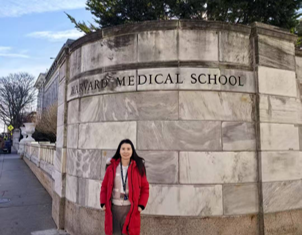
As a Harvard Medical School teaching hospital, Boston Children's Hospital maintains a robust academic environment. I participated in numerous clinical conferences featuring interdisciplinary case discussions. These sessions fostered intellectual rigor while maintaining an atmosphere conducive to inquiry and learning.
The surgical training methodology emphasizes progressive practical experience under expert supervision. This approach recognizes that surgical competency develops through deliberate practice with graduated responsibility. The routine interdisciplinary collaboration among urologists, nephrologists, radiologists, and other specialists demonstrated how coordinated care enhances clinical outcomes.
Research activities and quality improvement initiatives are integrated into routine clinical practice. Staff engagement in these endeavors reflects an institutional culture that views excellence as an ongoing process requiring continuous evaluation and refinement.
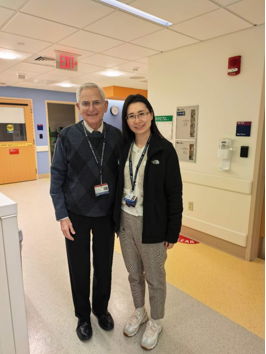
Dr. Estrada and his colleagues expressed substantial interest in our clinical work at Zhejiang University Children's Hospital. They acknowledged our significant clinical volume and developing expertise in minimally invasive techniques. We discussed establishing formal collaborative mechanisms, including telemedicine consultations and reciprocal professional exchanges.
Upon my return, I have identified several implementation priorities. First, accelerating the adoption and standardization of robotic-assisted surgical techniques within our department, accompanied by structured training protocols for our surgical team. Second, establishing a comprehensive urodynamic assessment platform to enhance our neurogenic bladder program. Third, developing a systematic long-term follow-up system for patients with disorders of sex development, recognizing that optimal outcomes require sustained clinical engagement.
Beyond technical enhancements, I aim to advance our institutional culture toward authentic family partnership. This includes creating formal mechanisms for family input into care delivery models, ensuring accessible health information for all families, and developing staff competencies to identify and address barriers to equitable care access.
Conclusion
This fellowship at Boston Children's Hospital provided far more than clinical skill development. It offered a comprehensive model of pediatric care that integrates technical excellence, family partnership, and institutional commitment to equity. The hospital's ability to maintain its foundational mission while continuously innovating represents an institutional maturity worthy of emulation.
The professional relationships established with Dr. Estrada and his team extend beyond conventional networking. Their willingness to engage in ongoing collaboration and knowledge exchange reflects the collaborative spirit essential to advancing pediatric medicine globally.
I am deeply grateful to Boston Children's Hospital for this educational opportunity and to Zhejiang University Children's Hospital for supporting my professional development. This experience has reinforced my commitment to pursuing excellence through the integration of advanced clinical techniques, compassionate patient care, and meaningful family partnership. These principles will guide my contributions to pediatric urology practice and education in the years ahead.

Wei Jia
Urology Department